

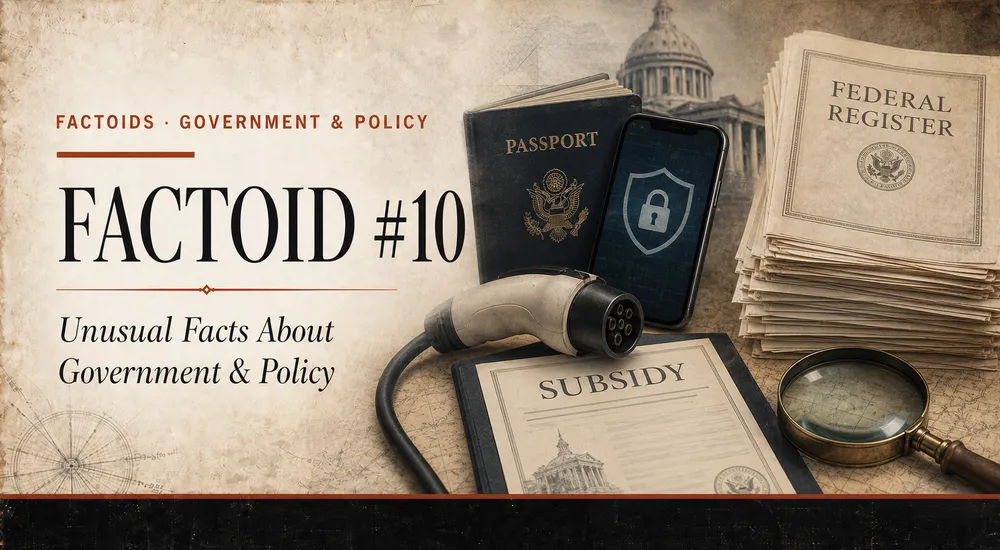
In a world surrounded by countless information sources, it can be difficult to keep up with everything happening around us. Factoid #10 presents a collection of unusual and thought-provoking observations about government policies, regulations, technology, electric vehicles, and current affairs.
These factoids are intended to highlight information that may receive less attention in mainstream discussions and encourage readers to consider the broader implications of government decisions.
Not a Place to Visit: China and Personal Device Access
The original article discusses a reported Chinese policy concerning visitors, residents, and people transiting through airports and raises concerns about access to personal electronic devices.
The broader issue is digital privacy.
Modern travelers increasingly carry smartphones, laptops, tablets, and other devices containing personal, financial, professional, and private information. Government policies that allow authorities to inspect or access electronic information therefore raise important questions about privacy, cybersecurity, individual rights, and border security.
For international travelers, understanding the rules governing electronic devices in a destination country can be an important part of travel preparation.
Electric Vehicle Subsidies and Government Spending
Another factoid examines government support for electric vehicles and EV-related repairs.
The discussion focuses on programs that can provide financial assistance to electric-vehicle owners for battery or fuel-cell repairs, or potentially toward replacement vehicles when repairs are not practical.
Programs of this type are generally intended to encourage the adoption of cleaner transportation technologies and reduce barriers to EV ownership.
However, they also raise questions about the use of public funds, government incentives, and whether taxpayers should subsidize private vehicle ownership and repairs.
The Cost of Government Regulations
The article also considers the financial impact of federal regulations on businesses and consumers.
Government regulations can serve legitimate purposes, including protecting public health, improving workplace safety, reducing environmental risks, and establishing consumer protections.
At the same time, regulations can create compliance costs for businesses and may affect prices, investment decisions, hiring, and product development.
The challenge for policymakers is determining whether the benefits of a regulation justify the economic and administrative costs it creates.
The Federal Register and Government Rules
One of the most interesting observations in Factoid #10 concerns the number of pages published in the Federal Register.
The Federal Register is the U.S. government’s official daily publication for proposed and final rules, notices, presidential documents, and other federal actions.
The original commentary compares the number of Federal Register pages published during different administrations and uses the comparison to question whether the growing volume of federal regulations actually makes citizens’ lives easier, safer, or more productive.
The page count alone, however, does not measure the quality or economic impact of regulations. A better assessment requires examining the substance, costs, benefits, and practical effects of individual rules.
Why Government Regulation Matters
Government regulation affects almost every part of modern life.
Rules can influence businesses, transportation, energy, healthcare, finance, employment, environmental policy, technology, and consumer products.
Supporters argue that regulation can prevent harmful practices and protect the public. Critics argue that excessive regulation can create unnecessary bureaucracy, increase costs, and limit economic freedom.
The discussion surrounding Factoid #10 reflects this continuing debate over where the appropriate balance should exist between government oversight and individual or business autonomy.
The Role of Alternative News Sources
The article concludes by explaining why it draws attention to stories from the California Post.
The author believes that smaller or alternative publications can sometimes highlight stories that receive less attention from larger media organizations.
Readers can benefit from examining information from multiple sources, particularly when a story involves controversial political, economic, or cultural issues.
At the same time, comparing claims against primary documents, official data, and independent reporting can help readers distinguish between factual information, interpretation, and opinion.
Frequently Asked Questions
What is Factoid #10 about?
Factoid #10 presents several observations and commentary concerning government policy, digital privacy, electric vehicles, federal regulations, and news coverage.
What is the Federal Register?
The Federal Register is the U.S. government’s official publication for federal rules, proposed rules, notices, presidential documents, and other government actions.
Why are EV subsidies controversial?
EV subsidies can encourage adoption of electric vehicles and reduce ownership costs, but critics question whether public funds should be used to subsidize private vehicle purchases or repairs.
Why is digital privacy important for travelers?
Travelers may carry sensitive personal, financial, professional, and private information on their electronic devices. Rules allowing authorities to inspect or access such information can therefore raise significant privacy concerns.
Do more Federal Register pages necessarily mean more government regulation?
Not necessarily. Page counts indicate the volume of material published but do not independently measure the economic significance, effectiveness, or burden of the rules involved.
Why should readers use multiple news sources?
Using multiple sources can provide different perspectives and help readers identify disagreements, missing context, and claims that require additional verification.
What is the main purpose of Factoid #10?
The main purpose is to present unusual or less-discussed information and encourage readers to think critically about government policy, regulation, spending, privacy, and current events.