
Professor N.A.M. Rodger’s earlier volumes on the naval history of Britain began in the seventh century and continued through the end of the Napoleonic Wars. The Price of Victory forms the third volume of this ambitious history, opening with the Royal Navy at the height of its power and tracing its transformation and decline from around 1840 into the modern era.
The book examines the difficult transition from traditional sailing vessels to hybrid sail-and-steam ships and eventually to modern naval technology. The scope is immense, but Rodger goes beyond conventional naval history by exploring the people, institutions, innovations, political decisions, and sacrifices that shaped Britain’s naval development.
The Royal Navy’s Transition Into the Modern Era
One of the book’s major strengths is its examination of the Royal Navy during a period of enormous technological and institutional change.
The transition from sail to steam created new challenges for naval planners, officers, and shipbuilders. At the same time, the British naval establishment had to respond to changing political priorities, economic pressures, technological developments, and the demands of modern warfare.
At times, Rodger’s detailed discussion of nineteenth-century naval bureaucracy can be demanding. The personalities, political disputes, and institutional battles can be difficult to follow, particularly when many relatively obscure historical figures enter the story.
Yet these sections reveal an important lesson. The political and economic struggles surrounding the Royal Navy were not entirely different from the institutional battles that continue to influence governments and organizations today.
The Women’s Royal Naval Service
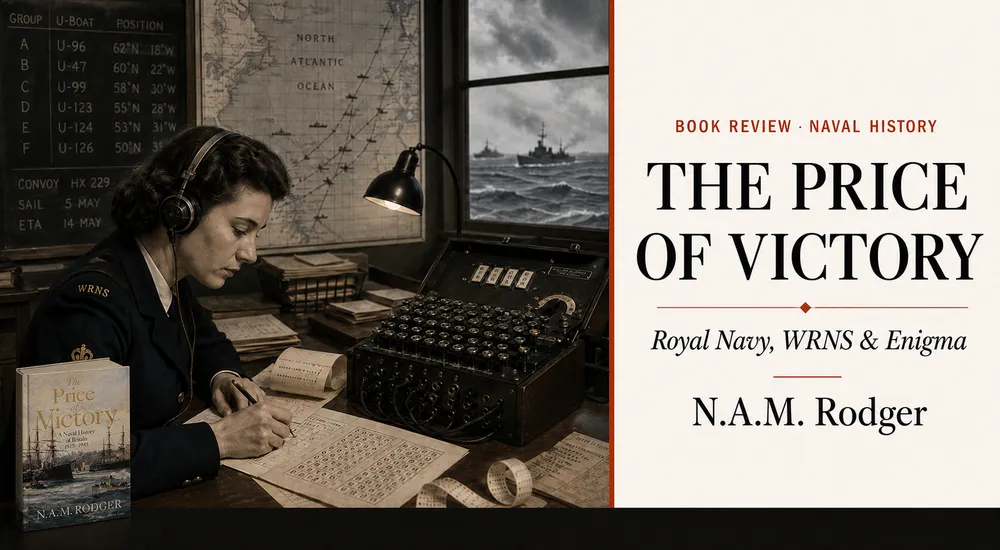
One particularly interesting section focuses on the Women’s Royal Naval Service (WRNS) and the important role women played in Britain’s naval history.
At a time when women were still largely expected to remain in the home, the naval establishment supported the creation of the WRNS during the First World War. The organization was placed under female leadership, with its first director, Dame Katharine Furse, given considerable freedom to select her staff and establish the service.
As the First World War continued, the responsibilities of the WRNS expanded. When the service was disbanded in 1919, its 438 officers and 5,054 ratings were all women, and many were reluctant to return to civilian life.
Former members established the Association of Wrens, which later contributed to the reconstitution of the service. During the Second World War, the WRNS once again took on significant responsibilities, performing efficiently and sometimes heroically while freeing valuable manpower for other naval duties.
Breaking Enigma: The Government Code & Cypher School
Another fascinating part of The Price of Victory concerns the Government Code & Cypher School (GC&CS) and its contribution to Allied intelligence during the Second World War.
Building on information obtained from Polish cryptographic efforts, British intelligence was able to exploit captured German Enigma machines and read significant amounts of German communications.
The intelligence gathered through this work had major consequences for the Battle of the Atlantic. Information about German submarine operations helped the Allies route convoys away from U-boats and deceive German forces about sailing routes and dates.
Admiral Karl Dönitz did not fully understand the scale of the intelligence compromise. Despite the terrible losses suffered during the Battle of the Atlantic, the work of the GC&CS made a substantial contribution to the eventual Allied victory.
The Small Facts That Change the Picture
Rodger also demonstrates an ability to use small historical details to change the way readers understand major events.
One memorable example appears in his discussion of the siege of Malta during the Second World War. Rodger notes that the total tonnage of German bombs dropped on Malta exceeded the tonnage dropped on London during the Blitz.
For readers familiar with Malta, this comparison can make the intensity of the campaign particularly vivid. A single statistic can transform an abstract historical event into something much easier to appreciate and understand.
These details are one of the book’s greatest strengths because they give context to events that are often summarized too briefly in conventional histories.
Is The Price of Victory Worth Reading?
The Price of Victory by N.A.M. Rodger is a substantial book, extending beyond 600 pages before the appendices, with approximately 91 pages of footnotes. As a result, it can be demanding in places, particularly for readers who are new to detailed naval history.
However, its length is also part of its appeal. The book is packed with historical facts, personalities, technological developments, institutional struggles, and stories of sacrifice.
New readers should not feel pressured to move through it quickly. Reading fewer pages in a sitting may actually make the experience more rewarding, allowing time to absorb the large amount of information Rodger presents.
For anyone interested in British naval history, the Royal Navy, military history, wartime intelligence, and the development of modern naval warfare, The Price of Victory offers an exceptionally detailed and rewarding reading experience.
Frequently Asked Questions
What is The Price of Victory by N.A.M. Rodger about?
The Price of Victory examines British naval history from around 1840 into the modern era, focusing on the Royal Navy’s technological development, political challenges, wartime experiences, and institutional changes.
What period does The Price of Victory cover?
The book begins around 1840, when the Royal Navy was transitioning from sail toward steam-powered vessels, and follows British naval development into the modern era.
What does the book say about the Women’s Royal Naval Service?
Rodger discusses the creation and development of the WRNS during the First World War, its female leadership and growing responsibilities, its postwar legacy, and its important contribution during the Second World War.
How did the Government Code & Cypher School contribute to World War II?
The GC&CS helped read significant amounts of German communications involving Enigma and other signals intelligence. This information helped Allied forces counter German U-boats and improve convoy routing during the Battle of the Atlantic.
Is The Price of Victory difficult to read?
The book can be demanding because of its length and detailed discussions of naval personalities, politics, and institutions. However, its extensive historical information makes it highly rewarding for readers interested in naval history.
Is The Price of Victory worth reading?
Yes. Despite its considerable length, the book offers a detailed and richly researched account of British naval history and is particularly suitable for readers interested in the Royal Navy, military history, technology, and wartime intelligence.