

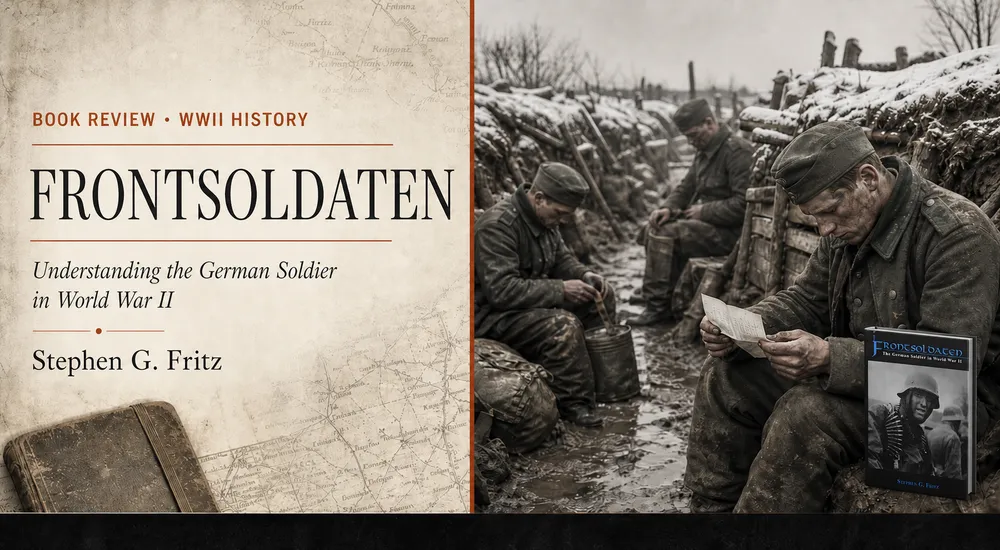
Stephen G. Fritz’s Frontsoldaten: The German Soldier in World War II examines the experiences, attitudes, training, and battlefield behavior of German soldiers during the Second World War. The book explores an important historical question: how was the German military able to continue offering effective resistance despite material disadvantages, years of combat, heavy casualties, and the loss of air superiority?
Fritz approaches the subject by looking beyond battlefield statistics. He examines basic military training, unit cohesion, combat conditions, supply difficulties, ideology, and the personal experiences of soldiers serving on different fronts.
German Military Training and Unit Cohesion
Fritz begins with basic training and examines how German soldiers were prepared for combat. Training emphasized physical toughness, discipline, endurance, and comradeship. The principle that hardship in training could reduce suffering in combat became an important part of the military culture.
After completing basic training, many soldiers developed a strong sense of identity and self-worth associated with wearing the uniform and belonging to their military unit.
The book also examines the role of unit cohesion. Rather than concentrating all of the strongest personnel in elite formations, the German military structure generally distributed capable soldiers throughout regular combat units, with some exceptions among elite Waffen-SS formations. This approach could strengthen ordinary combat units and help maintain battlefield effectiveness.
National Socialism and the German Soldier
Another important aspect of Frontsoldaten by Stephen G. Fritz is its examination of ideology and social conditioning.
Fritz discusses the influence of National Socialism and the concept of Volksgemeinschaft, or the idea of a national community. German young people were exposed to organizations such as the Deutsches Jungvolk and Hitler Youth before entering adult employment or military service.
These organizations promoted the idea that individuals were part of a larger national community. Within this framework, military service could be viewed not simply as an individual obligation but as a defense of the nation and its community.
This ideological environment helps explain some of the attitudes expressed by German soldiers in their letters, diaries, and personal writings. At the same time, understanding these beliefs is important for placing the soldiers’ experiences within the broader political and social context of Nazi Germany.
Letters and Diaries From German Soldiers
One of the strengths of the book is its use of personal accounts from soldiers serving at the front.
Letters and diaries naturally contain familiar complaints about weather, food, exhaustion, and the difficulties of fighting an enemy. However, they also reveal deeper reflections about war, society, personal responsibility, and the meaning of military service.
These accounts provide a more personal perspective on the war than battlefield statistics alone can offer. They show how individual soldiers experienced prolonged combat, physical exhaustion, fear, uncertainty, and the gradual changes brought about by years of warfare.
Some soldiers continued to express support for Hitler and National Socialism despite devastating developments such as the losses in North Africa and Stalingrad, the Allied bombing campaign, and the German retreat on the Eastern Front.
Why Did the Wehrmacht Continue Fighting?
A central question explored in Frontsoldaten is why the German military remained capable of resistance even after years of war and enormous casualties.
Fritz points to several interconnected factors, including military training, unit cohesion, ideological commitment, comradeship, and the psychological conditioning of soldiers.
The experiences of individual soldiers also mattered. Bonds formed during training and combat could create a powerful sense of responsibility toward fellow soldiers. For some, continuing to fight was connected not only to political beliefs but also to loyalty toward their comrades and the communities they believed they were defending.
The book therefore presents military effectiveness as a complex combination of institutional, social, psychological, and ideological factors.
Is Frontsoldaten Worth Reading?
Frontsoldaten by Stephen G. Fritz is a useful historical study for readers interested in World War II, German military history, the Wehrmacht, and the experiences of ordinary soldiers.
Rather than focusing solely on generals and major battles, the book examines the mindset and daily experiences of soldiers who served on the front. Its use of personal writings helps illustrate how soldiers understood the war and their own role within it.
The book can also help readers understand why the Wehrmacht remained a significant fighting force through the final stages of the war, despite severe losses and increasingly unfavorable military circumstances.
For readers seeking a deeper understanding of the German soldier’s experience during World War II, Frontsoldaten provides a detailed examination of training, comradeship, ideology, combat, and the psychological dimensions of prolonged warfare.
Frequently Asked Questions
What is Frontsoldaten by Stephen G. Fritz about?
Frontsoldaten examines the experiences and mindset of German soldiers during World War II, focusing on military training, unit cohesion, ideology, combat conditions, and personal accounts.
What does Frontsoldaten say about German military training?
The book examines how German basic training emphasized physical toughness, discipline, endurance, and comradeship, helping prepare soldiers for the demands of prolonged combat.
Why does Frontsoldaten discuss German ideology?
Fritz examines how National Socialist ideology and the concept of Volksgemeinschaft influenced German society and helped shape the attitudes and motivations of some soldiers during the war.
Does Frontsoldaten use soldiers’ personal accounts?
Yes. The book draws on diaries, letters, and other personal writings to explore how individual German soldiers experienced combat and understood the war.
What does Frontsoldaten explain about the Wehrmacht?
The book explores several factors that contributed to the Wehrmacht’s continued battlefield effectiveness, including training, unit cohesion, comradeship, military organization, and ideological influences.
Is Frontsoldaten worth reading?
For readers interested in World War II military history, German soldiers, the Wehrmacht, and firsthand perspectives on combat, the book offers a detailed examination of the experiences and mindset of German frontline soldiers.